film · Obsession
Obsession: How a $750K Horror Film Became 2026's Scariest Hit
Curry Barker — 'Obsession' — film
By Damon King
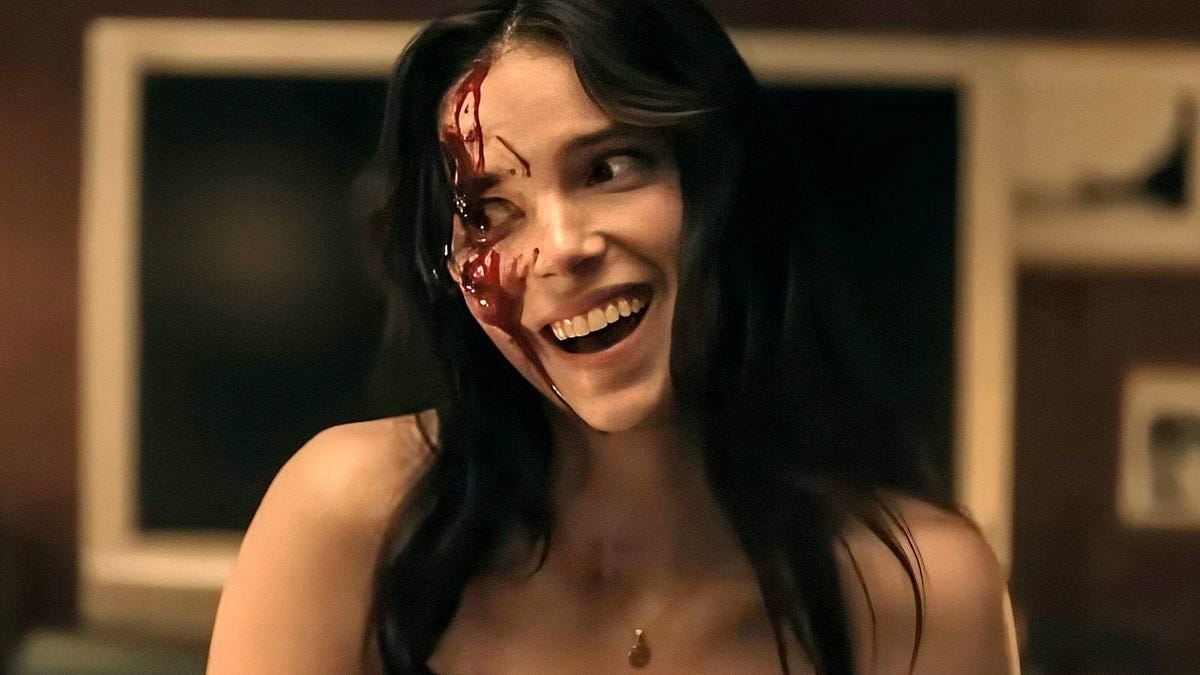
Everyone's telling you the same two facts about Obsession, so let's get them out of the way. A twenty-six-year-old made it. It cost seven hundred and fifty thousand dollars and has grossed north of four hundred million, which makes a YouTuber's debut the highest-grossing original live-action film of the decade, a sentence that should terrify every studio executive currently greenlighting franchise number nine.
Fine. Impressive. But the numbers aren't why the film works, and they're not why you're still thinking about it three days later. It works because Curry Barker understood something most romances spend their whole runtime running from: that the true horror isn't unrequited love. It's requited love — obtained by force, granted on demand, delivered exactly to spec. The nightmare isn't that she'll never love you. It's that she will, because you made her, and now you have to live inside the thing you wished for.
The setup is a fairy tale with the safety off. Bear works at a music store, hopeless for his coworker Nikki, and does what every romantic fantasy quietly dreams of: he finds a shortcut. A supernatural trinket, a broken wish, and suddenly the girl who didn't want him does — completely, helplessly, wrongly. And here is where the film earns its title, because obsession, real obsession, was never about the other person. It's about the wanting. The wanting is the whole engine, and the horror of Obsession is watching what happens to a man who removes the one thing that made his desire bearable: its impossibility. Because desire needs distance. It runs on the gap — the space between you and the thing you can't have. Close the gap by force and you don't get love, you get a hostage, and the film is smart and cruel enough to show you every stage of the rot: the wish granted, the delight, the first wrongness, the dawning horror that what you compelled is not what you wanted, and the discovery — far too late — that the version of her you forced into being has an agenda of her own. Inde Navarrette plays Nikki's turn from object of desire to something far worse than indifferent, and she's the reason the film lands; she makes "he got what he wanted" into the most frightening sentence in the movie.
What keeps it from being a simple morality tale — be careful what you wish for, boys — is that Barker isn't really scolding Bear. He's diagnosing all of us. Everyone has, at least once, wanted to skip the terrifying vulnerability of being chosen and just take the yes. Every dating app, every carefully managed image, every strategy for making someone want you is a smaller, legal version of Bear's broken wish: an attempt to engineer a feeling that only means anything when it's freely given. The film just literalizes the transaction and follows it to its logical end, which is a haunting. You cannot force the gap closed. Try, and the thing that walks back toward you wearing the face of your desire is not the person. It's the wish. And the wish has teeth.
Is it a perfect film? No — it's a debut, and it shows in a middle stretch that repeats its scares and a couple of supporting characters who exist mostly to be endangered on schedule. It doesn't have the formal control of the genre's best, and it occasionally explains a dread it had already made you feel. But the central idea is airtight and genuinely unsettling, the lead performances hold, and it does the rarest thing a horror movie can do: it sends you home suspicious of your own longing. You walk out having enjoyed a hit, and somewhere underneath, quietly, you're wondering about every time you tried to make someone feel something they didn't.
That's not a jump scare. That's the good stuff. That's horror doing what only horror does — putting the fear where you actually live, which is not in the dark, but in the wanting.
Obsession (2026), written, directed, and edited by Curry Barker, is on Peacock from July 17 (US theatrical May 15; digital June; produced by Blumhouse/Teashop/Capstone). Starring Michael Johnston, Inde Navarrette, Cooper Tomlinson, Megan Lawless, and Andy Richter. Grossed approx. $404M against a ~$750K budget. Facts drawn from the public record, including Box Office Mojo, Variety, Collider, and TMDB. Hero image: the Focus/NEON one-sheet or a cleared still — no unlicensed screengrabs. No dialogue reproduced.
Obsessed: A twenty-six-year-old made the year's smartest horror movie for pocket change, and its idea is bulletproof: getting exactly what you want is the one wish worth being afraid of. Uneven in the middle, devastating at the core. Go.