film · Madonna
Madonna's Confessions II Film Is 13 Minutes of Pure Escape
Madonna — 'Confessions II – The Film' — film
By Damon King
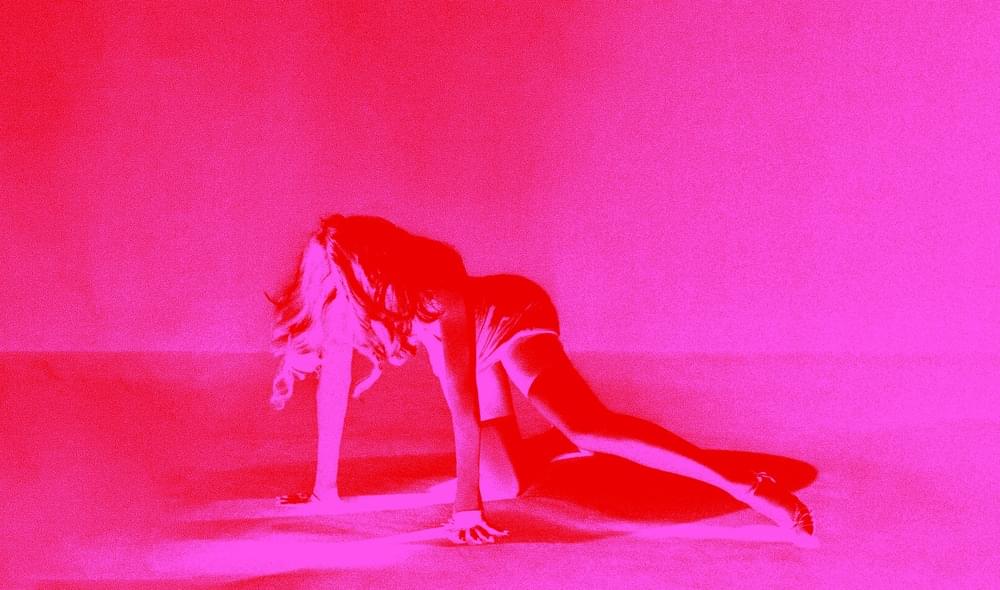
The most honest image in pop this year is Madonna alone in a revolving chair while a SWAT team breaks down her door — not with guns, but with cameras.
That's how Confessions II – The Film opens. The Queen of Pop, seated, still, and then surrounded: a squad of lingerie-clad women in tactical formation, lenses raised like weapons, closing in. It's the paparazzi, of course — the machine that has hunted her for forty years rendered as an armed raid. And the rest of the film, all thirteen delirious minutes of it, is her running from them. Apartment to forest to car crash to nightclub, one continuous chase, until she reaches the only room the cameras can't fully own. The dance floor.
Directed by TORSO — David Toro and Solomon Chase, the duo who also made Charli XCX's SS26, which tells you something about who the culture trusts to stage its self-image right now — the film is billed as a visual album built around the first six songs. That's the marketing. What it actually is, is an argument, and a sharper one than a "visual album" usually bothers with. Tribeca's own copy named it exactly: a work that "lives in the tension between control and surrender, between being seen and disappearing into a crowd." Sit with that second phrase. Disappearing into a crowd. In 2026, when disappearing is the one thing the culture will not permit you to do, Madonna made a thirteen-minute film about the ecstasy of vanishing into a room full of bodies.
It is, to be clear, completely unhinged, and gloriously so.
There are women in a forest with green lasers firing from between their legs. There is a car crash. There is Benedict Cumberbatch voguing outside a bathroom stall while, inside, Madonna makes out with men she's plucked from the urinals. There is Kate Moss doing a hair-flip in a club mirror, timed — with a straight face — to the exact moment Madonna mentions cocaine. There are latex-wrapped women eating bananas. There is Gwendoline Christie, Julia Garner dancing, Honey Dijon, Shygirl, Arca, Debi Mazar reprising a friendship that started at the actual Danceteria in 1983, and Lourdes Leon, Madonna's daughter, closing the whole thing out to the biggest cheer of the night. It is dark, sticky, hot, and decadent — an expensive video shot at the coolest party you'll never be invited to. And yes, some of it is obvious highlight-reel logic — when the song titles flash on screen, you remember this is, on one level, an ad for an album. Madonna knows. She's the woman who invented using the music video as something more than an ad, back when MTV and she were both young, and she's said plainly that a plain video now feels "cheap." So she made something that refuses the format even as it uses it: not a clip, not quite a short film, a "let's-get-unconscious freaky bedtime story," in one critic's words. The looseness is the point. Like the album, it's built as one continuous mix, dream logic over structure, the tracks bleeding into each other so you can never quite find the edges.
But strip away the lasers and the cameos and look at what the film is about, because underneath the camp there's a genuinely serious idea, and it's the same one running through the whole Confessions II project.
The film is a chase between two kinds of being-looked-at. There's the camera that hunts her — the SWAT-team paparazzi, the surveillance, the being-seen that is done to you, extractive, relentless, the lens as a weapon pointed at a woman who has spent half a century as the most photographed person in any room. And there's the other kind: the dance floor, where you are also seen, but chosen, dissolved into a crowd, watched by no one and everyone at once, the gaze turned warm. The whole film is Madonna running from the first kind of looking toward the second. From surveillance to communion. From the camera that takes to the crowd that holds.
That's not a small idea, and it's not a nostalgic one. It's the most contemporary thing she could possibly be saying. We all live now inside the first kind of looking — measured, captured, hunted by lenses we hold ourselves. And the film's argument, its only real argument, is that there is still one room where the other kind of looking survives. Where you can be a body among bodies instead of a face in a feed. She spends thirteen minutes being chased by the modern condition and escapes, at the end, into a nightclub — because in Madonna's cosmology the club was always the sanctuary, the place the cameras can follow you into but never quite capture.
The lasers are a joke. The escape is not.
Is it a great film? Wrong question — it was never trying to be a film. It's a great provocation, and a better one the second and third time through, once you stop waiting for it to behave like cinema and let it wash over you like the club it's actually about. Yes, it's excessive. Yes, it's in love with its own budget. That's not a flaw in a Madonna project; that's the medium. What it delivers is a thirteen-minute argument about what it feels like to be alive and hunted and looking for the one room that still holds you — dressed up in green lasers and Dolce archive and Benedict Cumberbatch's vogue — and there is nothing else like it, because there is no one else who could have made it. At sixty-seven, chased by every camera she ever outran, she still knows exactly where the exit is.
It's the same place it's always been. She's just the only one still brave enough to run for it in front of everyone.
I've watched it more times than I'll admit.
Confessions II – The Film is on YouTube (released June 8, 2026). Directed by TORSO. Costumes by Dolce & Gabbana; choreography by Damien Jalet. Details and cameo identifications drawn from the public record, including Rolling Stone, The Hollywood Reporter, Billboard, Variety, and Slant. No lyrics reproduced. Any screenshots used are for editorial/critical purposes.
Obsessed: Thirteen minutes of a woman outrunning the surveillance state and diving into the crowd, and I couldn't look away. The lasers are silly. The thesis is bulletproof. Put it on again.