film · Leviticus
Leviticus Turns Queer Desire Into a Monster That Hunts You Alone
Adrian Chiarella — 'Leviticus' — film
By Damon King
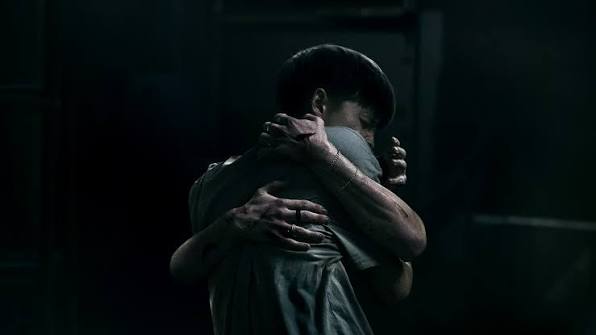
The best horror premise of the year is also the oldest queer feeling in the world: the thing you want most is the thing that could destroy you, and it comes for you when no one else is watching.
That's the engine of Leviticus, the Australian writer-director Adrian Chiarella's first feature, and it is a genuinely vicious little idea, executed with more control than a debut has any right to. Two teenage boys in a drab, powerline-humming evangelical town fall for each other. Their community, having found out, subjects them to a ritual — a homegrown conversion rite, sold as deliverance — that curses them with a presence. The presence takes the form of the person they most desire. It appears only when they're alone. And the more they want, the more real, the more deadly, that figure becomes. Desire, weaponized and turned back on the person who feels it. Love as the murder weapon.
You do not need a decoder ring for this. The title is Leviticus — the book of the Bible wielded like a blade against gay people for centuries — and Chiarella isn't hiding the allegory. He doesn't need to. The literalization is the point: this is what it actually feels like to grow up wanting what you've been told is an abomination. The wanting becomes the haunting. The thing you can't stop feeling becomes the thing that hunts you through an empty house. Every closeted kid who ever lay awake terrified of their own pulse will recognize the mechanism instantly.
What makes it more than a clever metaphor is that Chiarella understands the queer horror tradition he's writing inside. He's said it plainly: horror has always been the secret language of queer audiences, because we don't just watch the hero flee the monster — we recognize ourselves in the monster, the demonized thing pushed to the fringe. From James Whale's tender creatures through Nightmare on Elm Street 2 to now, the genre has always known that the real terror, for some of us, is being cast as the abomination. Leviticus takes that inheritance and makes it literal without making it stupid. The monster is desire. The monster wears the face of the boy you love. The monster is you.
It sits, knowingly, in the It Follows lineage — the unseen or shapeshifting force as metaphor, the horror you can't outrun because it's a condition, not a killer. But where It Follows was about the dread of consequence, Leviticus is about the dread of feeling itself, which is worse, because you can abstain from an act but you cannot abstain from a longing. "It comes for you when you're alone," a girl who's survived the ritual warns them, and that line is the whole film — because being alone is exactly when desire speaks loudest, and exactly when the closet does its cruelest work.
The performances hold it. Joe Bird — who broke out at fourteen in Talk to Me — anchors the film as the shy, watchful Naim, and Stacy Clausen gives Ryan the golden, careless confidence of the boy who doesn't yet know the town is watching. Their chemistry is the film's engine and its heartbreak; critics have noted, correctly, that the movie plays more romantic than horrific, and that's not a flaw, it's the design. You have to believe the wanting or the haunting means nothing. Mia Wasikowska, as Naim's mother — drawn to the church's order out of her own grief — is the film's quietest horror: the parent whose love has been rerouted into fear. "We need fear," she tells her son. "It's how we survive." A whole worldview of damage in five words.
I won't pretend it's flawless, because it isn't, and the flaw is worth naming. The film rockets so hard toward its thesis that the third act loses its footing — several of the middle scares don't land, some of the family logic stays frustratingly blurry, and the ending withholds closure in a way that reads, depending on your generosity, as either brave refusal or a missing final movement. Chiarella builds a nearly perfect machine of dread and then doesn't quite know how to switch it off. It's the kind of flaw that comes from ambition, not laziness — he had more thesis than plot, which is the right problem for a debut to have, but it's a real one, and it keeps the film a half-step from the masterpiece its premise deserves. And yet. The craft is startling, the lead performances are the real thing, the central idea is the sharpest horror conceit in a year already crowded with good ones, and the whole thing lands its final, furious point: that the cruelty here was never the desire. It was everyone who decided the desire was a demon and went looking for a ritual to burn it out. Chiarella made that timely without making it a lecture — this is a film about conversion therapy that never once says the phrase, and is more devastating for the restraint.
Stay through the credits. Frank Ocean gave the film "Self Control" — his first film license in years, reportedly granted by personal letter — and it plays over the end like a benediction the movie itself refuses to offer its characters. Of course it's that song. A film about the ache of wanting what you're told to control, scored out on a song by that name, by that man. Sometimes the culture aligns exactly right.
Leviticus (2026), written and directed by Adrian Chiarella, is out now via NEON (US/Australia theatrical June 19). Starring Joe Bird, Stacy Clausen, and Mia Wasikowska. Premiered in the Midnight section at Sundance 2026. Details drawn from the public record, including Variety, Slate, RogerEbert.com, Bloody Disgusting, and the film's press notes; Chiarella quotations as published. Frank Ocean's "Self Control" appears over the end credits. Hero image: the NEON one-sheet or a cleared still — no unlicensed screengrabs. No dialogue reproduced.
Obsessed: A debut with more thesis than third act — and it doesn't matter, because the premise cuts deeper than anything else in horror this year. The monster is desire. It wears the face you love. It gets you when you're alone. You already knew.