film · TORSO
Meet TORSO, the Duo Behind Madonna and Charli XCX's Wildest Visuals
Madonna and Charli XCX made the two most talked-about visuals of 2026. They hired the same directors. And both are really about the same thing: who you put in the room.
By Damon King
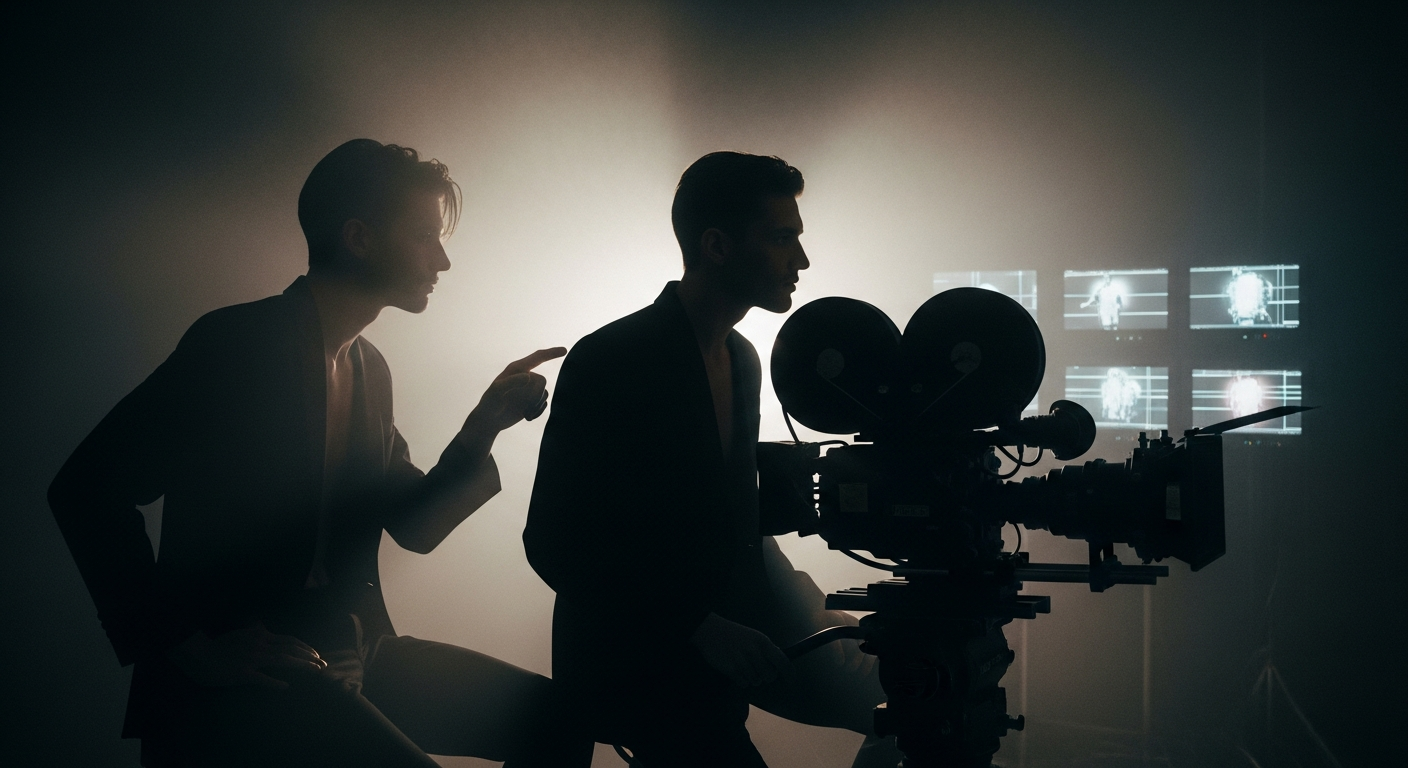
Here is a detail almost everyone missed, because you'd have to care about pop and fashion and the fine print of a director's credit to catch it, and most people pick one. The two most dissected pop visuals of the year — Madonna's Confessions II film and Charli XCX's SS26 — were made by the same two people. David Toro and Solomon Chase, who work as TORSO, partners in life and in work, a post-internet directing duo who came up through fashion film and now, apparently, direct how the culture sees its own biggest stars. Madonna hired them. Charli hired them. Within weeks of each other, the two most self-aware women in music handed the same pair of eyes the job of staging their persona — and both, independently, arrived at the same instrument. The cameo.
Not the song. Not the look. The casting. Both films are, underneath the choreography and the couture, elaborate exercises in who gets a seat — and once you notice that, you can't unsee it, because the guest list is the argument in both.
Start with Charli, because hers is the more surgical.
SS26 stages a fashion show as a descent — a runway, as one writer put it, that goes straight to hell. And Charli fills her front row not with influencers or friends but with the actual power structure of fashion, rendered with a precision that suggests someone in the room knew exactly what each face was worth. She seats herself, literally, between Carine Roitfeld — the former editor of French Vogue, the last true editrix — and Anthony Vaccarello, the creative director of Saint Laurent. On the establishment flank: Lucien Pagès, whose PR agency effectively decides which Paris shows matter. Farida Khelfa, the Alaïa and Gaultier muse, downtown royalty made flesh. And threaded through: the sound designer Michel Gaubert, whose ears have scored two decades of runways, and Loïc Prigent, the documentarian the industry lets film everything.
That is not a guest list. That is a seating chart of who holds power in fashion, assembled by a pop star to sit in judgment of a show that leads nowhere. And it's Roitfeld — of course it's Roitfeld — who opens the whole thing by looking down the barrel and delivering the album's thesis: fashion won't save us, but let's go on the runway and walk. Charli cast the high priestess of fashion-as-salvation to announce that fashion saves no one. The casting isn't decoration. The casting is the joke, and the sermon.
Now Madonna, whose version is louder, longer, and more crowded — a fourteen-minute fever dream where the cameos are, in her own word, the Easter eggs.
The Confessions II film runs on a different engine than Charli's cold fashion satire. It's a surveillance nightmare turned dance party: Madonna chased by a SWAT team of camera-wielding women, fleeing through an apartment, a forest, a car, and finally into the one room that has always saved her — the club. And it's there, in a crowded club bathroom set to "Danceteria," that she detonates the guest list. Kate Moss. Benedict Cumberbatch. Julia Garner — the actress once cast to play Madonna in the still-unmade biopic, now dancing beside the real thing, a casting choice that is itself a tiny essay. Gwendoline Christie. Richard E. Grant. Debi Mazar — a Desperately Seeking Susan deep cut, the friend who's been there since 1985. Sabrina Carpenter, the duet partner and designated heir. And, last, Lourdes Leon, Madonna's own daughter, who ends the entire film by calling "Cut, bitch" — the next generation literally shutting down the shoot.
Where Charli casts power, Madonna casts lineage — a bathroom full of people who span her whole life, from the 1980s downtown to the actress who'd play her to the daughter who'd bury her. Charli's front row is a hierarchy. Madonna's bathroom is a family tree. Two directors, two casting philosophies, one instrument.
So what does it mean that the same duo made both?
TORSO come out of fashion film, which is the tell. Fashion has always understood something pop is only now catching up to: that in a saturated culture, the look is cheap and the guest list is everything. Anyone can make a beautiful image now — the phone in your pocket can. What can't be faked, what still carries actual meaning, is who agreed to stand in the frame with you. A cameo is the one thing money alone can't fully buy; it requires that the person decides you're worth being seen beside. It's social capital rendered visible. TORSO, trained in the industry where that currency is oldest and most brutal, understood that both Madonna and Charli were really asking the same question — what am I worth, and who will confirm it — and answered it the same way: fill the room with proof. That's the through-line of pop's strangest, richest year. Charli made a record called Music, Fashion, Film insisting none of the three can save you, then hired fashion-film directors to stage the argument with fashion's own aristocracy. Madonna made a film about being watched by a camera she can't escape, then packed it with the most-watched faces she could summon. Both of them, guided by the same hands, landed on the same truth: the persona isn't built from what you wear or what you sing anymore. It's built from who you can get into the room.
The look was never going to save them. They knew that. So they cast the room instead — and the room, it turns out, is the whole show.
Confessions II – The Film is on YouTube. Charli XCX's "SS26" video is out now; the album Music, Fashion, Film arrives July 24 on Atlantic. Both directed by TORSO (David Toro and Solomon Chase). Cameo identifications drawn from the public record, including Vogue, Variety, The Hollywood Reporter, and Wikipedia; verify against final cuts before print. No lyrics reproduced.
Optional image: the Saint Laurent SS27 front-row portrait of Charli XCX, Madonna, and Connor Storrie together (Paris, June 23, 2026) literalizes this essay's thesis — the front row as casting, the establishment and the new talent seated as an argument. Shared with the Storrie style Pick. Credit the wire/photographer; editorial use only.