art · Sakamoto
Inside Ryuichi Sakamoto's KAGAMI+ in Osaka — The MR Concert
In Osaka right now, you can put on a headset and walk around Ryuichi Sakamoto as he plays — three years after he died. It is the most unsettling, most beautiful question anyone has asked about what an artist leaves behind.
By Damon King
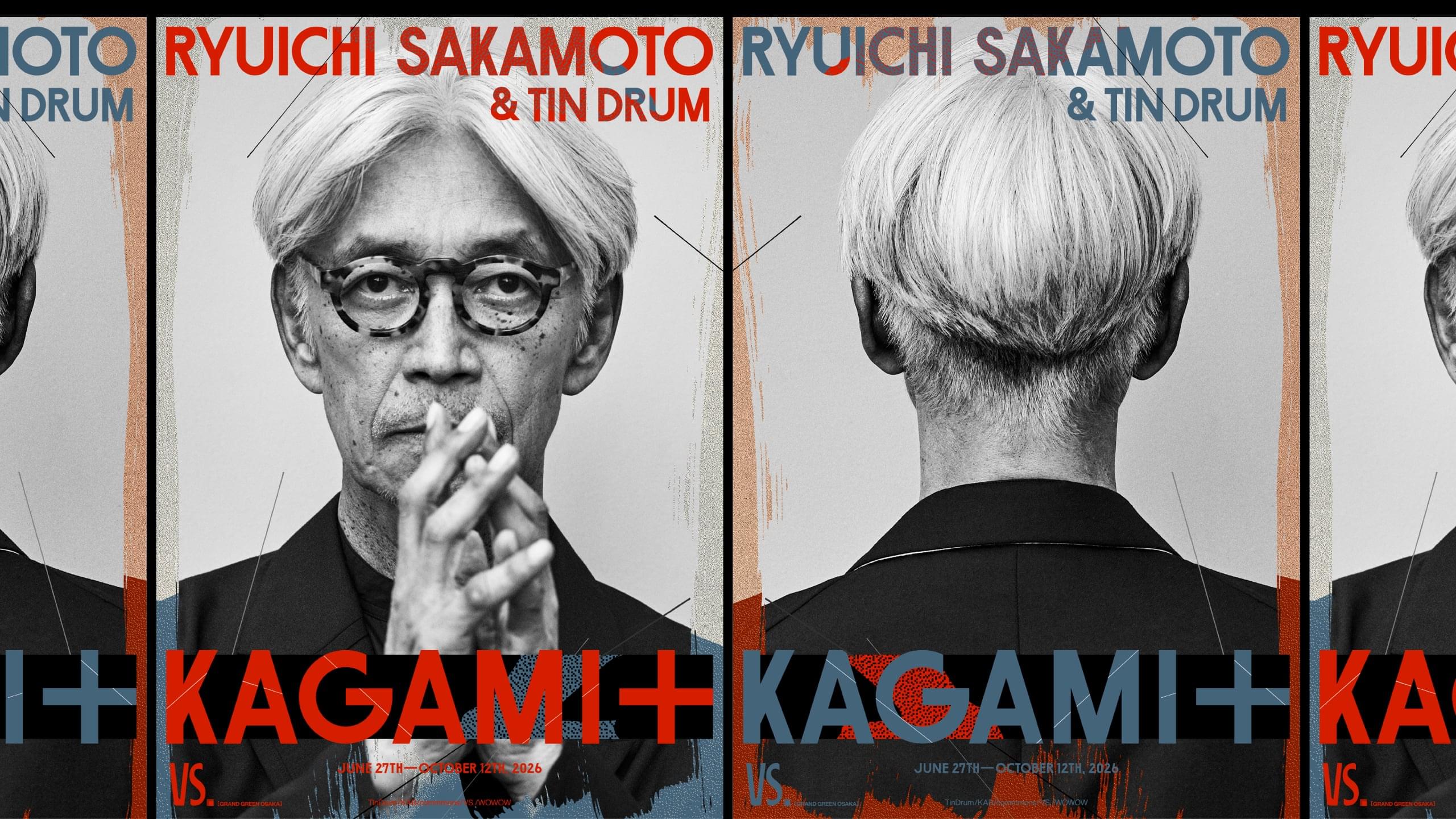
Ryuichi Sakamoto died in March 2023. In Osaka, right now, he is playing the piano.
Both of those sentences are true, and the space between them is the whole subject. KAGAMI+ — the mixed-reality concert he built with the studio Tin Drum before his death, now installed in Osaka through October — hands you a transparent headset and lets you walk around him: a hyper-realistic three-dimensional Sakamoto, seated at a piano that isn't there, playing ten of his compositions in spatial sound while you circle the performance like a mourner who arrived at the wrong funeral, the one where the dead man is still working.
You can stand behind him. Beside him. Watch his hands from an angle no concert would ever have allowed. He does not look up. He does not know you're there. He was captured, volumetrically, while alive — and what plays now is not a recording of a performance but a reconstruction of a presence, a man rendered so precisely that the only thing missing is the one thing that matters, which is that he's gone.
Here is why this is not a gimmick, though it would be easy to file it as one — dead-celebrity hologram, the Tupac-at-Coachella trick in an art frame.
The difference is that Sakamoto made this himself. He sat for it knowing what it was: a machine for his own persistence, built while he was dying, a way to keep playing after he could no longer play. That changes everything. This isn't a corporation reanimating a dead star to sell tickets. It's an artist looking directly at his own erasure and deciding to compose through it — to turn his disappearance into one more medium, the way he'd turned tsunami-warped pianos and melting Greenland ice into instruments. Of course he did this. The man who spent his life dissolving borders got to the last border, the one between here and gone, and did what he always did: he made something on both sides of it.
And it raises the question that no amount of streaming ever quite forces: what is an artist, once the body is gone? We say their work "lives on," and we mean it as comfort, a figure of speech. KAGAMI+ takes the figure of speech and makes it literal and strange and slightly unbearable. The work doesn't just live on. He does — a version of him, a rendered ghost that will keep playing "Merry Christmas, Mr. Lawrence" in headsets for as long as the files run, long after everyone who saw him play in life is gone too. Is that immortality or is it a beautiful haunting? He answered it himself, during the filming in January 2023, and the answer is the most Sakamoto sentence imaginable. "In reality, there is a virtual me," he said. "This virtual me will not age, and will continue to play the piano for years, decades, centuries." And then, before the thought could curdle into anything as vulgar as hope: "Ah, but the batteries won't last that long." That's the whole man in two lines — the cosmic reach and the dry refusal to be caught believing in his own immortality. He built the room, propped the door, and made a joke about the power supply. Then he left.
What makes it Sakamoto and not spectacle is the restraint of the thing. The exhibition doesn't only give you the ghost. It surrounds him with the rest of a sensibility: the TIME collaboration with Shiro Takatani, rooms where you sit with his albums played back on open-reel tape — analog warmth as a deliberate rebuke to the digital resurrection in the next room — photography, text, and a fragrance he blended himself, because of course the man who thought in every sense wanted you to smell the exhibition of his own afterlife. He designed his haunting to engage the whole body, and then he made sure the ghost never performs for you. It plays for itself. You're just permitted to watch.
That's the detail that undoes you, if you let it. Every other posthumous cash-in makes the dead perform — sing the hits, hit the marks, serve the crowd one more time. Sakamoto's ghost does no such thing. It sits at a piano and plays as though no one is there, because when he recorded it, no one was — just a dying man and a machine and the music, exactly as it always was. He didn't build a concert. He built a portrait of the solitude that made the concerts possible, and then he stepped out of his own body and left it running.
Go if you can — it's in Osaka until October, and there may never be a stranger way to spend an hour with someone who isn't there. And if you can't get to Osaka, the estate has released an official KAGAMI+ film that opens the door a crack from anywhere. But understand what you're walking into. Not a hologram. Not a trick. A man who looked at his own ending and, instead of raging or weeping, quietly built a door and propped it open, so that some part of him could keep doing the only thing he ever wanted to do.
KAGAMI+ (Ryuichi Sakamoto & Tin Drum) is installed at VS., Umekita Park, Grand Green Osaka, through October 12, 2026 — its only Japan stop. The MR concert features ten compositions including "Merry Christmas, Mr. Lawrence" and "Energy Flow," alongside the TIME collaboration with Shiro Takatani, open-reel-tape listening rooms, photography, text, and a Sakamoto-blended fragrance. KAGAMI previously toured The Shed, New York (2023), Manchester International Festival (2023), the Roundhouse, London (2023), and TIFA Taiwan (2024). Details from the official KAGAMI+ site and public record; the "virtual me / batteries" quotation is from Sakamoto's January 2023 filming, per the exhibition materials and press. The official KAGAMI+ film is on Sakamoto's official YouTube channel (link in text) — embed or link it rather than reposting frames. This essay is written about the exhibition and its meaning, not as a firsthand attendance review. Ryuichi Sakamoto: b. January 17, 1952; d. March 28, 2023. Companion to "Moses in the Desert" and "The Last Time He Watched the Moon."