music · Sakamoto
Ryuichi Sakamoto's Beauty, Reissued: Why He Still Matters
Ryuichi Sakamoto spent his life dissolving the borders everyone else was busy defending. A 1989 reissue is a good excuse to admit he was right about all of it.
By Damon King
There's a word Ryuichi Sakamoto liked, borrowed from a philosopher friend, that explains almost everything he ever made. Outernational. Not international — internationalism, he pointed out, still believes in nations, still files everyone under a flag before it lets them shake hands. Outernational was something stranger and freer. "Like Moses in the desert," he told the writer David Toop. "There's no country. There is just trade, communication and merchants, but there's no nationality." And then the part people forget: "It's a utopia and I like it."
He said that around 1989, the year he made Beauty — the album a downtown listening bar and Capitol Records are now, in 2026, putting back on vinyl in a definitive double LP. And you could treat that reissue as a nice bit of record-collector news, another lovely object for the shelf. Or you could treat it as what it actually is: an invitation to notice that the man was decades early, that the culture spent thirty years catching up to a position he'd already left, and that he died — in March 2023, at seventy-one — still ahead of it.
Let's do the second thing.
Understand first how he built it, because the method is the argument. There was no cloud, no shared drive, no attaching a stem to an email. Sakamoto assembled Beauty by hand and by air — carrying tapes and floppy disks between Tokyo and New York, gathering an international cast one studio and one flight at a time, welding four continents together at the speed of a passport, not a broadband connection. Borderlessness the hard way. The embodied way. The way that costs something.
By 1989 Sakamoto had already burned through more careers than most artists survive one of. He helped invent synthpop with Yellow Magic Orchestra while Kraftwerk were still warming up. He stood in front of a camera opposite David Bowie in Merry Christmas, Mr. Lawrence, scored the film he was acting in, and won an Oscar for The Last Emperor — and treated all of it, the acting and the awards and the fame, as side quests. The real work was stranger. He'd record half of 1980's B-2 Unit in London with the dub pioneer Dennis Bovell and then fly to Düsseldorf to work in Kraftwerk's own Kling Klang studio, welding electro to dub to Afrobeat years before the culture had a tag ready for the weld.
That restlessness gets mistaken for dilettantism by people who need artists to hold still. It was the opposite — a philosophy with a passport, and it was ruthless. Beauty is its fullest statement: an album where Okinawan folk sits beside a Rolling Stones cover, where Brian Wilson and Youssou N'Dour and Robert Wyatt and the reggae drum titan Sly Dunbar and Arto Lindsay all turn up in the same room, none of them a guest exactly, because a guest implies a host, and Sakamoto had burned the house down. Pitchfork later called it "sonic cosmopolitanism." The Baffler called it "a sublime bricolage of the heavy fruits of globalism." Both are academic ways of saying outernational — a record that refused to be from anywhere, and therefore got to take from everywhere.
The stories behind it tell you everything about the man. He wanted Robert Wyatt for the Stones cover because he wanted, in his own words, the saddest voice in the world to sing it — and Wyatt, a communist, couldn't legally enter the United States, so Sakamoto mailed the tape across the border the voice couldn't cross. Sit with the shape of that: an album about erasing borders, and the saddest voice in the world reaches it only because a physical tape went where the man was forbidden to. Meanwhile he and Arto Lindsay spent the sessions reading English translations of haiku and Zen poetry, chasing an aesthetic of simplicity that still meant something — the same restraint-as-fullness that runs through every real aesthete from Tanizaki forward. He wasn't collecting sounds. He was building a sensibility, and using the whole world as his materials.
It was not, at the time, understood. Christgau shrugged. The reviews were mixed. A record with no country is a record with no shelf, and critics, like customs officers, get nervous when there's no flag to check. It took them the better part of two decades to circle back and notice Beauty had been standing in the future the whole time, bored, waiting for them to arrive.
Here is why he matters now, specifically, and not just as a beautiful artifact to reissue. We live inside the opposite of outernational. Everything is tagged. Everything is sorted — by genre, by region, by mood-playlist, by the algorithm's quiet decision about what you are and what you'll therefore be shown next. The machine cannot process a thing that refuses a category; it needs the flag to route the traffic. And so the culture has quietly trained a whole generation of artists to be legible — to pick a lane, wear it, and stay in it, because the system rewards the sortable and starves the strange.
Sakamoto is the standing rebuke to all of it. He built a body of work specifically designed to be unfileable — electronic then classical then ambient then pop then film then the glitchy near-silence of his final records — and the through-line was never a sound. It was a sensibility: refined, curious, borderless, allergic to the easy hook and the fixed address. He is the patron saint of the artist who will not be made legible. Which, if you've been paying attention, is the most valuable thing an artist can be in 2026, and the rarest — because most of them sold the option years ago for a spot on the right playlist, and called it strategy. There's a Kovert argument buried in his whole life, and it's this: taste that refuses to explain its passport is the last luxury the algorithm can't manufacture. The machine can generate infinite content in any named style, on demand, forever. What it cannot do is want three incompatible things at once and force them to cohere by sensibility alone. That was Sakamoto's entire trick, and it's not a trick you can prompt. He wanted everything, from everywhere, and dissolved the borders between them until the dissolution itself became the style.
And then there's the other reason to sit with him now, the one the reissue can't help but raise: he is gone.
His last years got quieter and quieter — async, then 12, released two months before he died, a record of breath and space and a piano miked so close you can hear the room around it. He knew what was coming; he'd been living with cancer since 2020, working, his label said, "with music until the very end." The final document, Opus, is just him and a piano, filmed by his son, playing his own life back one piece at a time. I won't tell you it's moving, because he'd have hated the word — too soft, too easy, a flag on a thing that refused flags. Call it what it is instead: a man dissolving the last border, the one between here and not, and declining to make a production of it. The most outernational move of his life, done in near-silence. That's the thing about a sensibility built on dissolving boundaries. It prepares you, better than sentiment ever could, for the final one.
So yes — buy the reissue. Put Beauty on, loud, in a room with other people, the way it was meant to be heard, before earbuds turned listening into a private act of consumption. But hear it for what it is: not a nostalgia object, not a collector's flex. A message from someone who stood in the desert thirty-five years ago, looked at all our flags and borders and neat little genre tags, and quietly declined every one of them.
He was right. He was early. He's still ahead of us.
Put on the record. There's no country in it.
Beauty's 2xLP reissue arrives July 17 via In Sheep's Clothing and Capitol Records. Pre-order here.
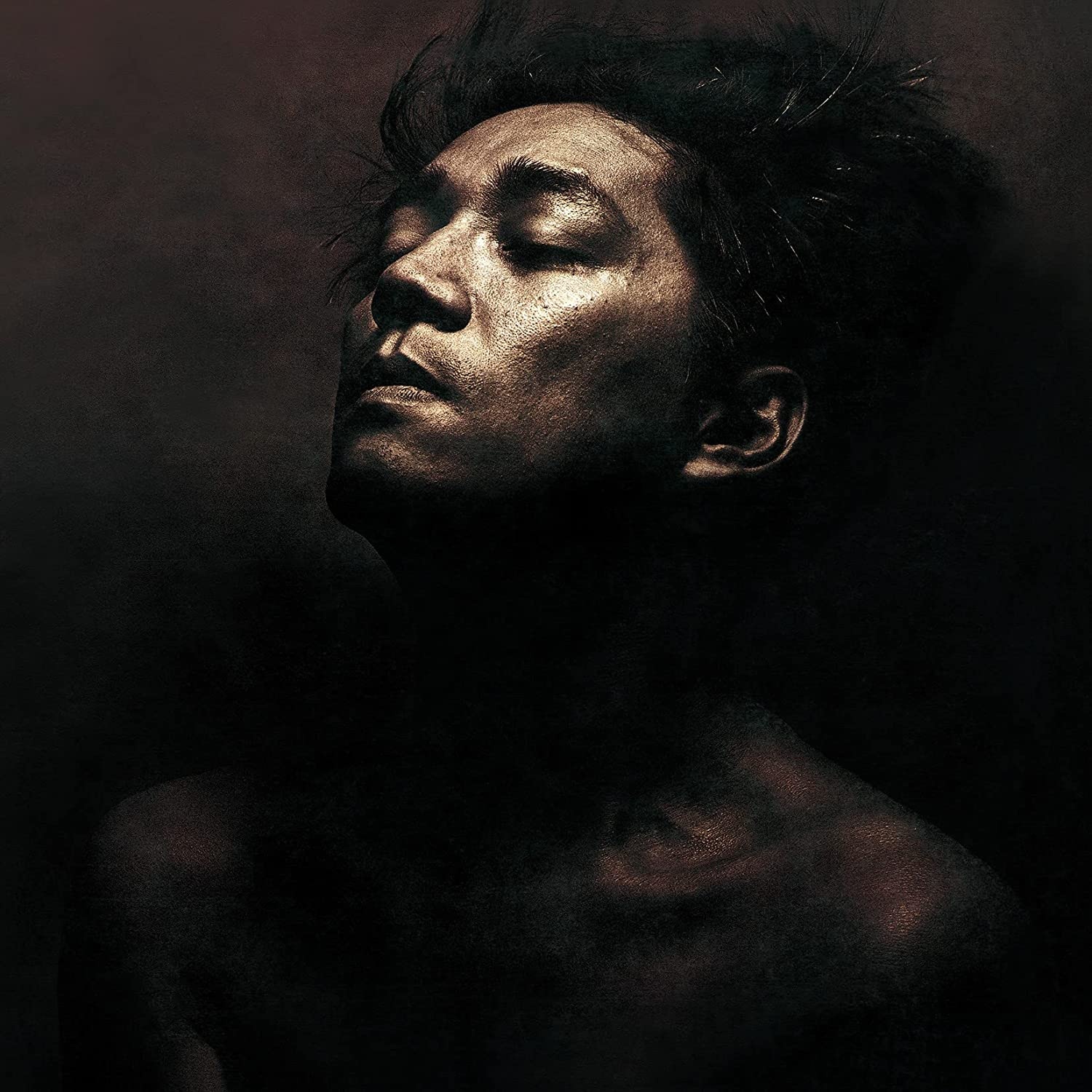
Hero image: the cover of Beauty (Ryuichi Sakamoto, 1989) — the sepia chiaroscuro portrait, eyes closed, head tilted to the light. On-brand and firewall-clean; credit as album art. Alt hero: a black-and-white Sakamoto portrait if a cleared one is available. Beauty returns to vinyl in a 2xLP edition from In Sheep's Clothing and Capitol Records (arrives July 17). Facts drawn from the public record, including Wikipedia, Pitchfork, The Baffler, and David Toop's Ocean of Sound (the source of the "outernational / Moses in the desert" quotation); the tape-and-floppy, Wyatt, and haiku details are documented in Randall Roberts's making-of feature for In Sheep's Clothing, worth reading in full for the deeper session history. Ryuichi Sakamoto: b. January 17, 1952; d. March 28, 2023. No lyrics reproduced.