nightlife · The Q
After the Q: What Queer Nightlife Owes Its Own
The Q is gone, and the way it ended should stay with us. Two men left Hell's Kitchen gay bars and never made it home. This is about what we owe each other in the dark.
By Damon King
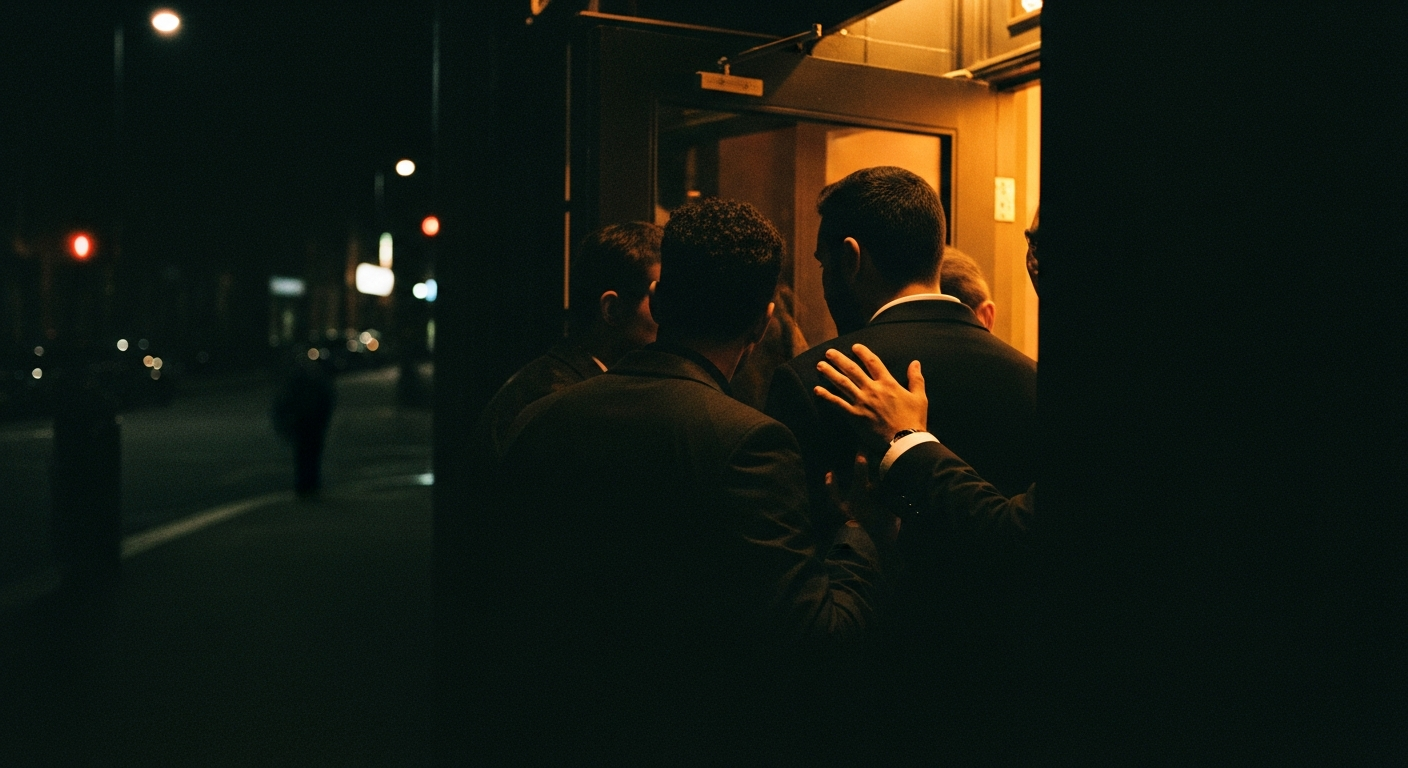
We spend a lot of words in this magazine on the dance floor as sanctuary — the room where you get to dissolve, be a body among bodies, put the phone away and disappear into the crowd. It is one of the truest things queer nightlife offers, and it is worth defending. But there is a darker fact folded inside the same sentence, and the story of the Q forces us to say it plainly: the places built to make us free have also, sometimes, been the places we were most exposed. A sanctuary is only sanctuary if it keeps you safe. Otherwise it's just a room where something happened to you.
The Q — the Hell's Kitchen club once billed as the largest queer-owned venue in Manhattan, backed by names we all know — closed in 2024, and the how of it matters. There were lawsuits, allegations, a management collapse; that part is a business story, and not an especially edifying one. But the part that should stay with us is this: the Q was the last place John Umberger was seen alive. In 2022 he left, was drugged with a lethal mix he never chose to take, robbed, and found dead. He was not alone in it. Julio Ramirez died the same way after leaving another Hell's Kitchen gay bar weeks earlier. The press called the crew responsible the "roofie robbers." They moved through our neighborhoods, our bars, our supposed safe rooms, hunting men who had gone out looking for exactly what we all go out looking for: a night, a connection, a few hours of not being afraid.
Sit with the cruelty of the mechanism, because it's specific. These men weren't attacked in some hostile straight space. They were taken from inside the sanctuary — or on its doorstep, in the vulnerable minutes after, when you're loosened and open and trusting because the whole point of the room you just left was to let your guard down. That's what makes it a particular kind of violation. The predators understood the sanctuary and used it against the people inside. They knew that a man leaving a gay bar at 3 a.m. is a man who came out to be unguarded, and they built their whole scheme on turning that openness into a wound.
And here is the part that should make every one of us pay attention: it worked because the community's ordinary defenses were down. Not because anyone was careless — because the entire promise of the space is that you get to be careless there, that you get to stop scanning the room for threat the way queer people learn to scan every other room. That promise is precious. It is also, we now know, something predators will exploit. Both things are true, and holding both is the only honest way through.
So what do we actually owe each other, given that? Not fear. Fear is what they want, and a community that stops dancing has already lost the thing worth protecting. What we owe each other is the return of an old discipline — the one queer people practiced for decades when the world was more openly dangerous, and set down, understandably, as the world seemed to soften. Leave together. Arrive together. Watch each other's drinks and each other's faces. Notice when the friend who was luminous an hour ago has gone gray and unsteady in a way that isn't ordinary drunkenness. Refuse to let someone leave alone with a stranger when something feels off, even at the cost of seeming uncool, because uncool is survivable and the alternative is not. Know that the most vulnerable moment is not inside the club but outside it — the sidewalk, the cab, the walk — and close ranks exactly there. This is not paranoia and it is not a curfew. It's the buddy system that queer elders ran through eras far more hostile than this one, and it saved lives then. The dance floor can still be the place you dissolve. You just dissolve with people who will notice if you don't come back up. That's what a chosen family is for. That's the actual content of the word community, underneath all the ways it gets used to sell things — the agreement that I will get you home, and you will get me home, and neither of us disappears on the other's watch.
The Q is closed, and its specific story is tangled and ugly and not worth romanticizing. But John Umberger and Julio Ramirez were real, and they were ours, and they went out for the same ordinary reasons we all do. The best way to honor them is not a candle and a caption. It's the person you don't let leave alone tonight.
Keep dancing. Keep the phone in your pocket. And keep one eye, always, on the people you came with — because the sanctuary only works if we are the ones guarding the door. Everybody gets home. That's the rule. That's the whole rule.
This piece references the deaths of John Umberger and Julio Ramirez, who were drugged and robbed after leaving Hell's Kitchen gay bars in 2022; three men were indicted on murder charges in 2023, and reporting on the case is ongoing. Details drawn from the public record, including NPR, EDGE, W42ST, and court filings. The Q closed in 2024 amid separate litigation and management disputes. This is a community-safety essay, not a report on the active criminal case. If you or someone you know feels unsafe on a night out, look out for one another, and know that resources exist — the Anti-Violence Project (avp.org) supports LGBTQ survivors of violence. Hero image: something quiet and non-exploitative — an empty dawn street, a closed door — never crime-scene imagery or photographs of the victims. Credited, editorial use.