music · Madonna
Everyone Said Madonna Was Done. Confessions II Says Otherwise
Twenty years after the first Confessions, the Queen of Pop is holding the door open again. Confessions II isn't nostalgia — it's an argument about the last place we're still free.
By Damon King
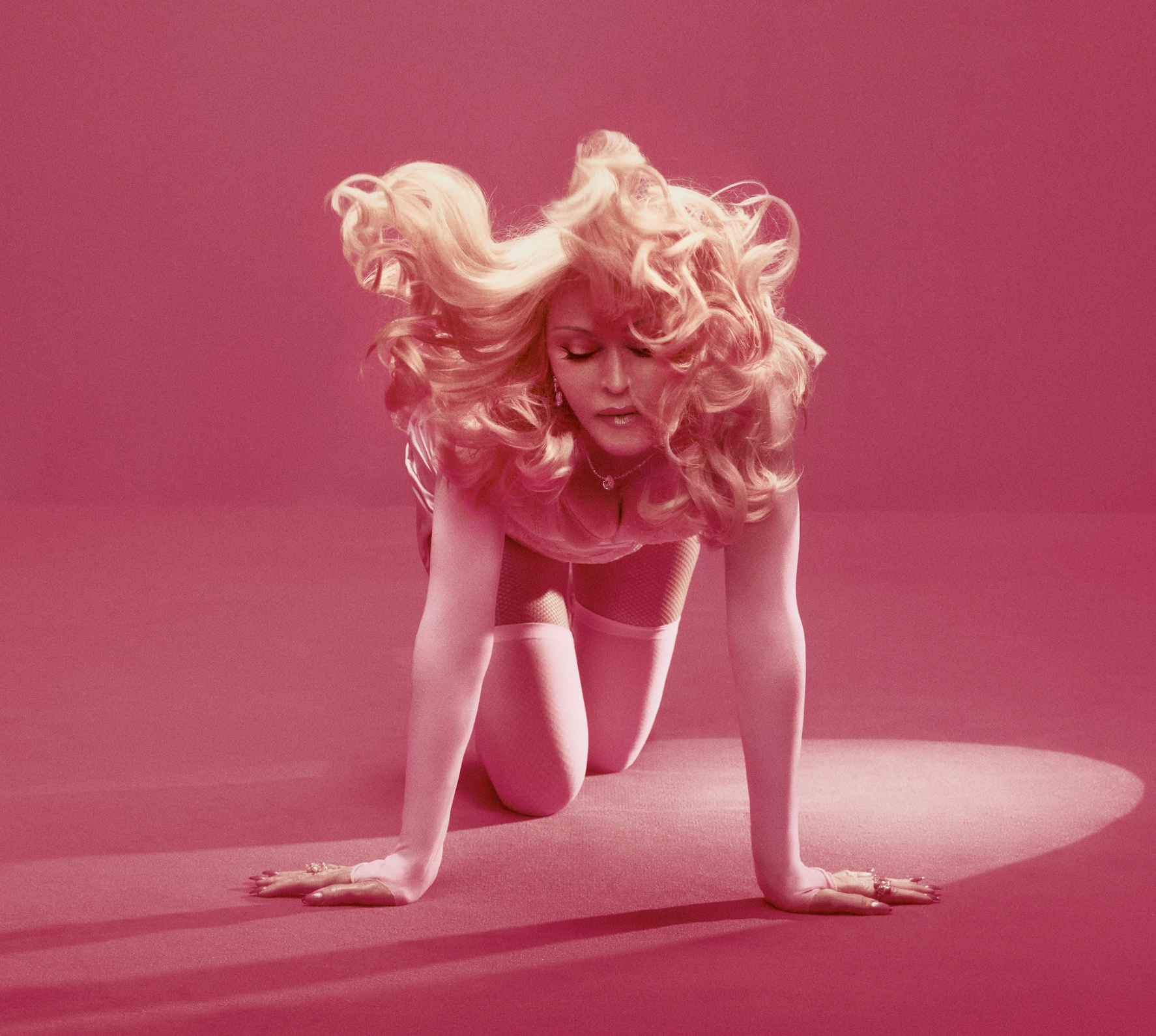
Update: Confessions II has since debuted at No. 1 on the Billboard 200 — Madonna's tenth chart-topping album and the biggest week for a dance record all year.
In the climate we're living in, the dance floor might be the last place we're free. Twenty years after the first Confessions, the Queen of Pop is once again holding the door open: leave your dread outside, and dance.
That's the whole invitation, and it should not work. Madonna is sixty-seven. The received wisdom says the party's over, that the club is a spent form, that the dignified move at her age is a quiet, autumnal record about mortality. Instead, on July 3, she released Confessions II — a sequel, twenty-one years later, to the 2005 album most people agree was her last untouchable one — and made the loudest possible case for the exact opposite. The reviews are the best she's had in two decades. The Guardian called it her most vital album in twenty years; the BBC, a hypnotic dancefloor odyssey. She made it the only honest way it could be made: back with Stuart Price, in a London studio, sequenced like a DJ set that never stops moving.
Everyone reached for the same word: return. But return to what is the question, and it's where this stops being a nostalgia story and becomes a Kovert one.
She gave away the thesis herself, to Vogue Italia, and it's the most interesting sentence any pop star has said this year: her dance music, she said, is an antidote to isolation. Antidote. Not escape, not throwback. The word you use for poison. And she's been clear about the poison — she's said the album came out of grief and professional strain and the sociopolitical weight of the moment, that she made something euphoric on purpose, as a distraction, because the alternative was to sink under it. One critic saw the campaign running on Grindr, the whole make-the-dancefloor-great-again pitch of it, and came ready to sneer. He didn't. Because under the camp is a real and slightly desperate argument: that in a world engineered to keep you alone — still, scrolling, sedated, self-surveilling — the act of putting a body in a room to move with other bodies is not frivolous. It's resistance. You can hear the argument in how the record is built. It opens with "I Feel So Free," a swirling post-disco epic laid over a nod to a 1989 house classic, Madonna murmuring in an intimate, breathy register about slipping into the shadows and remaking herself into whoever she wants to be — reinvention stated as the first article of faith, before a single chorus lands. From there it barely lets the BPM drop. This is a record that wants your body before it wants your attention.
The album is smart enough to know the dance floor was never only joy.
Its centerpiece, by near-consensus, is "Danceteria" — a spoken-word piece descended from "Vogue," where she reaches back to being twenty-two and broke, hustling her demo of "Everybody" to a DJ at the downtown club that gave the track its name. She summons the ghosts of that room: Basquiat, Nile Rodgers, the B-52s, the whole vanished ecosystem of a New York where a nobody from Michigan with overdue rent could talk her way toward the center of the world. The album closes on "L.E.S.," retracing that same Lower East Side, an infatuation with a bleach-blond boy, the days when the city was danger and possibility in equal measure.
And it does not flinch from the cost. "Bring Your Love," the Sabrina Carpenter collaboration, is big-room provocation — Madonna throwing down a gauntlet to a younger star the way she once kissed Britney onstage, the elder daring the heir to keep up. But then there's "Fragile," an icy UK-garage elegy with the frostbitten feel of "Frozen," written for her brother Christopher, who died in 2024 with their rift never fully healed. On this album the dance floor is where you go to be ecstatic and where you go to grieve — where the body metabolizes what the mind can't file. Ecstasy and mourning at the same tempo, in the same room. That isn't escapism. It's the most honest thing about the record.
Which is the real claim underneath all the sweat: Madonna is making an argument about where feeling is still allowed to happen.
Not in the feed. Not in the discourse, where every emotion is instantly performed, measured, and monetized. In the body. On the floor. At 3 a.m., with the lights threatening to come up. The dance floor is unmeasurable and collective; it leaves no data, only marks — a bruise, a memory, a stranger's cologne on your shirt in the morning. It is the natural enemy of the machine we now live inside, whose entire purpose is to keep you still and alone and legible. Madonna, at sixty-seven, with nothing to prove and every reason to go quiet, instead spent an entire album insisting that the cure for the isolation economy is the oldest technology she knows: the beat, the room, the night.
There's a temptation to call that the delusion of an icon who can't hear that the party's over. Hold that thought. Later this month a much younger artist releases a record built on precisely the opposite instinct — the conviction that the dance floor is exhausted, that the honest move now is to strip it down and walk away from the beat. We'll take that argument seriously when it comes.
But watch what Madonna did with the same exhaustion everyone claims to feel. She didn't diagnose the tiredness and retreat. She looked at a world designed to isolate you and decided the dance floor was never the symptom — it was the medicine, and had been all along, and the reason everyone feels so wrecked is precisely that they stopped going. The oldest person in the room turns out to be the only one still brave enough to say the cure was never complicated.
Get up. Find a room. Bring your body. Leave your dread at the door. The antidote is a dance floor — and at sixty-seven, she's still the one holding it open.
Confessions II is out now on Warner Records. Details and quotations drawn from the public record, including Vogue Italia, The Guardian, BBC, Variety, MOJO, and Paste. No lyrics are reproduced; song contents are described. All quotations as published.