nightlife · dance floor
Nightclubs Are Dying. The Dance Floor Has Never Been More Alive
Nightclubs are closing at a rate that ends them by decade's end. So why does the dance floor feel more alive than it has in years? Because the part that's dying and the part that's winning were never the same thing.
By Damon King
Here are two facts that appear to contradict each other, and don't.
One: the nightclub is dying. In the UK, three of them close every week. More than a quarter of late-night venues have gone dark since 2020. The Night Time Industries Association runs the math and arrives at a number that sounds like a typo — if the trend holds, zero remaining clubs by 2029. Corsica Studios, twenty-four years in Elephant & Castle, priced out by a developer. G-A-Y in Soho, gone. The Glory in East London, gone. A whole architecture of rooms, built over decades, being converted into flats nobody dancing could afford.
Two: nightlife has rarely felt more alive. Not in the shuttered mega-clubs — in the roving parties, the squat raves, the 40-person gatherings, the one-off nights that announce a location by text and vanish by morning. Twilo rose from the dead in New York for one weekend and the line went around the block. In London they're erecting poles under single spotlights in warehouses and improvising to live sets. The dance floor, pronounced dead, is out there sweating.
Both true. The trick is understanding that the thing dying and the thing thriving were never the same thing. What's collapsing is the nightclub as real estate — the licensed, rent-burdened, developer-coveted building. What's surviving, even flourishing, is the dance floor as ritual, which turns out not to need the building at all. It needs bodies, a sound system, a dark room, and an agreement about what happens in it. Take away the lease and the ritual just moves. It always has.
The sociologist Amin Ghaziani wrote a whole book on this — Long Live Queer Nightlife — and his argument is the one worth holding onto while the closure headlines pile up. The death of the brick-and-mortar gay bar didn't kill queer nightlife. It freed it. The closures created the conditions for something older and harder to kill: the roving, local, rave-like night, the party that owns nothing and therefore can't be evicted. "Bars are not the sum total of nightlife," he says, and the people building the new scene say it back to him, unprompted — that the absence of a permanent venue is exactly what let the scene survive at all. You can't redevelop a party that doesn't have an address.
This is the queer lesson, specifically, because queer people have run this exact play before. The community that danced through criminalization, through Section 28, through the AIDS crisis, through every mayor's "quality-of-life" crusade, was never depending on the goodwill of a landlord. "Religious people have churches," as one London founder puts it. "Queer people have clubs." And a church, it turns out, is not a building. It's a congregation that agrees to show up. Burn the building and the congregation just finds another room. That's not resilience as a nice idea. That's fifty years of documented practice.
But here's the part that should interest anyone watching where the culture is actually going, because it's the tell. The nights that are thriving — the ones with lines around the block, the ones people won't shut up about — share a specific and telling feature. They ban the phone. Phonox in Brixton: no phones on the dance floor, enforced. Lost in London: a phone ban, and a program of readings and screenings and performance built to make you present. The Landing Strip, Riposte, the squat raves — the whole rising underground is defined, again and again, by the same refusal. Put the camera away. Stop making content. Be here, in the dark, in your body, with these specific sweating strangers, in a moment that will not be recorded and therefore actually happened.
Sit with why that's the winning formula in 2026, because it's not an accident. The dance floor is now the last public space engineered for the one thing the rest of your life is engineered against: presence. Everywhere else, you are being measured, captured, optimized, served — hunted by the same lens whether it's in someone else's hand or your own. The phone is the tether to all of it. And the healthiest rooms in nightlife have collectively decided that the tether has to be cut at the door, because you cannot surrender to a crowd while you're performing for one. The no-phone policy isn't nostalgia. It's a design decision about what a dance floor is for. It's for the thing you can only do when nobody's filming.
This is what every good night has always known and what the culture is relearning the hard way: the dance floor is a machine for dissolving the self. You go to stop being a profile and start being a body. To be seen by everyone and no one at once — chosen, absorbed, gone. The mega-clubs died partly because they forgot this, became mirrors of capital, all optics and bottle service and content — a place to be seen rather than to disappear. The underground remembered. It always remembers. That's the whole reason it exists.
So no — don't mourn the club. Mourn the specific rooms, the good ones, name them, they mattered. But the dance floor was never the real estate. It was the agreement. And the agreement is being renewed right now, in warehouses and basements and rooms with a text-message address, by people who've decided that the most radical thing you can do in a surveilled century is get in a dark room with strangers, put the phone away, and let the beat take the self apart.
The club is dying. The dance floor is winning. Long may it refuse to be recorded. Put the phone away. Dance.
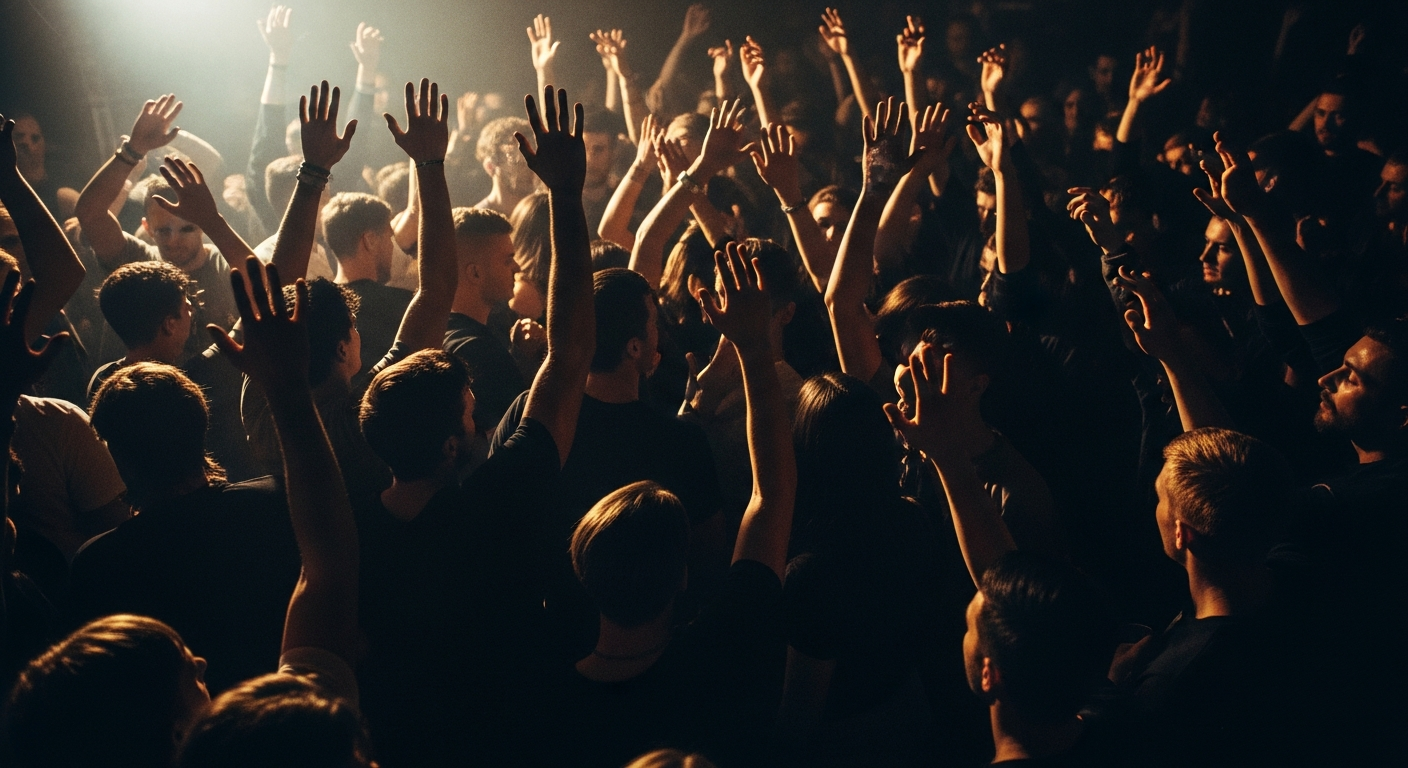
Figures and details drawn from the public record, including Time Out's "The Right to Dance" (2026), the Night Time Industries Association, Dazed, PAPER, Mission, and Amin Ghaziani's Long Live Queer Nightlife (quotations as published, including Lewis G Burton). Venue closures (Corsica Studios, G-A-Y, The Glory) as reported. This is an essay on nightlife culture, not a venue guide. Hero image: a dark, motion-blurred dance-floor photograph — bodies, not faces; credited, editorial use; and per house rules, no green inside the image.